

Gate Repair and Operators
Most gate trouble is either mechanical, a hinge, a roller or a post that has moved, or it lives in the operator and its controls. Telling which one it is starts with what the gate does and what you hear.
Signs You Need This
- The gate will not open or close all the way.
- It opens, but will not shut again.
- Grinding, clicking or humming from the operator while the gate stays put.
- The gate swings or slides crooked, or drags on the drive.
- The remote or the keypad has stopped working.
- The gate is stuck after a power cut.
What the Symptom Points To
The table pairs each symptom with the part most often behind it, and whether it can wait for a booked visit or needs sorting the same day.
More columns to the right: swipe.
| What you notice | Likely part involved | Can wait or urgent |
|---|---|---|
| Gate stuck shut, car inside or outside | Operator, power supply, or a seized hinge or roller | Urgent |
| Gate stuck open | Safety sensor blocked or out of line, operator settings, a jam in the track | Urgent if the gate keeps out traffic or pets |
| Operator hums, gate does not move | Stripped gear, a release left engaged, a seized hinge | Book soon |
| Gate sags and drags | Worn or loose hinges, a leaning post | Book soon |
| Slide gate jerks or stops | Grit or sand in the track, worn wheels or guide rollers | Book soon |
| Remote works only up close | Remote battery, receiver antenna | Can wait |
| Keypad dead | Keypad battery or wiring, a surge after a storm | Can wait if the remote works |
Hinges, Rollers and Posts
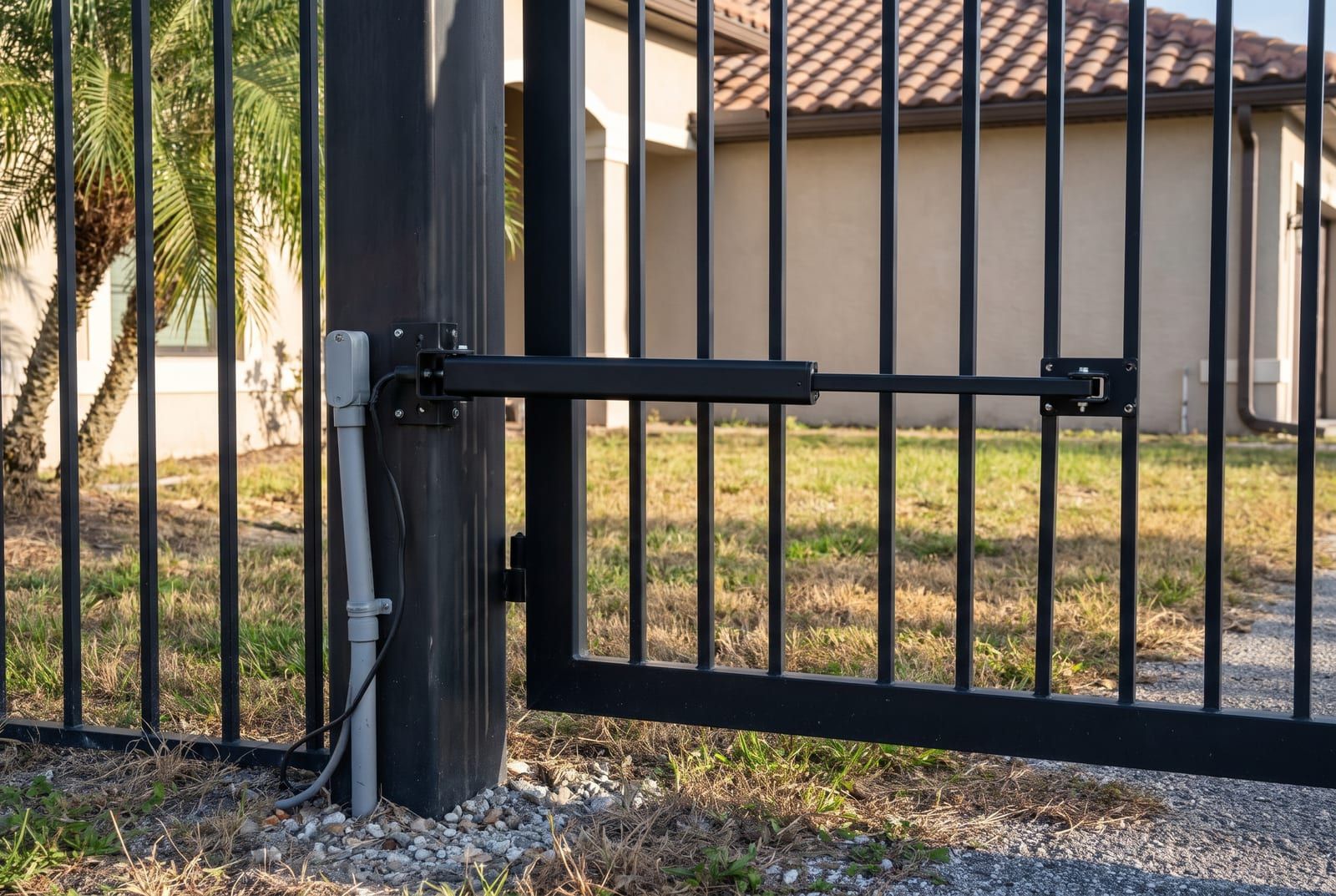
A swing gate hangs its whole weight on two hinges and one post. As the hinges wear or the post leans, the outer end drops, scrapes the drive and loads the operator arm with work it was not built for. Re-hanging the gate on new hinges, or resetting the post, takes that load off. A slide gate rides on wheels or rollers; sand and grit in the track wear them out, and a gate that has started to jerk usually needs the track cleared and the wheels replaced.
Operators, Keypads and Remotes
The operator is the motor that moves the gate, with a control board, a receiver for the remotes and safety devices that stop it if something is in the way. Summer storms bring power surges that can take out a board or a keypad, and salt air corrodes the terminals in an unsealed box. Repairs range from re-pairing a remote and replacing a keypad to a new gear set or a new board; an operator that is old and has failed more than once is often better replaced than patched.
Gate operators, keypads and remotes come from a handful of makers, and most are serviceable. If you know the make and model, have it to hand when you call; it is usually on a label inside the operator’s cover.
A Gate Stuck Shut
How does the manual release work?
Every automatic gate has one, so it can be moved by hand when the power is out. On a swing arm it is usually a key or a pin at the arm; on a slide operator a key or lever on the box. Once released, the gate moves freely, so hold it as it swings. Lock the release again when power is back.
What should I do if the gate is stuck shut?
Check that the operator has power and that nothing is blocking a sensor. If it still will not move, use the manual release if you know where it is. If the gate will not move even when released, a hinge or roller has likely seized: do not force it with a vehicle, and call.
The gate opens but will not close. Why?
Most often a safety sensor sees something, or one has been knocked out of line, so the gate refuses to close. Clear the opening and wipe the sensor lenses. If it still stays open, the operator settings or the sensor wiring need checking.
Can my old gate get an operator?
Often, if the gate moves freely by hand and the posts are solid. The gate installation page covers what a new or upgraded setup involves.