

Garage Door Repair in Cape Coral
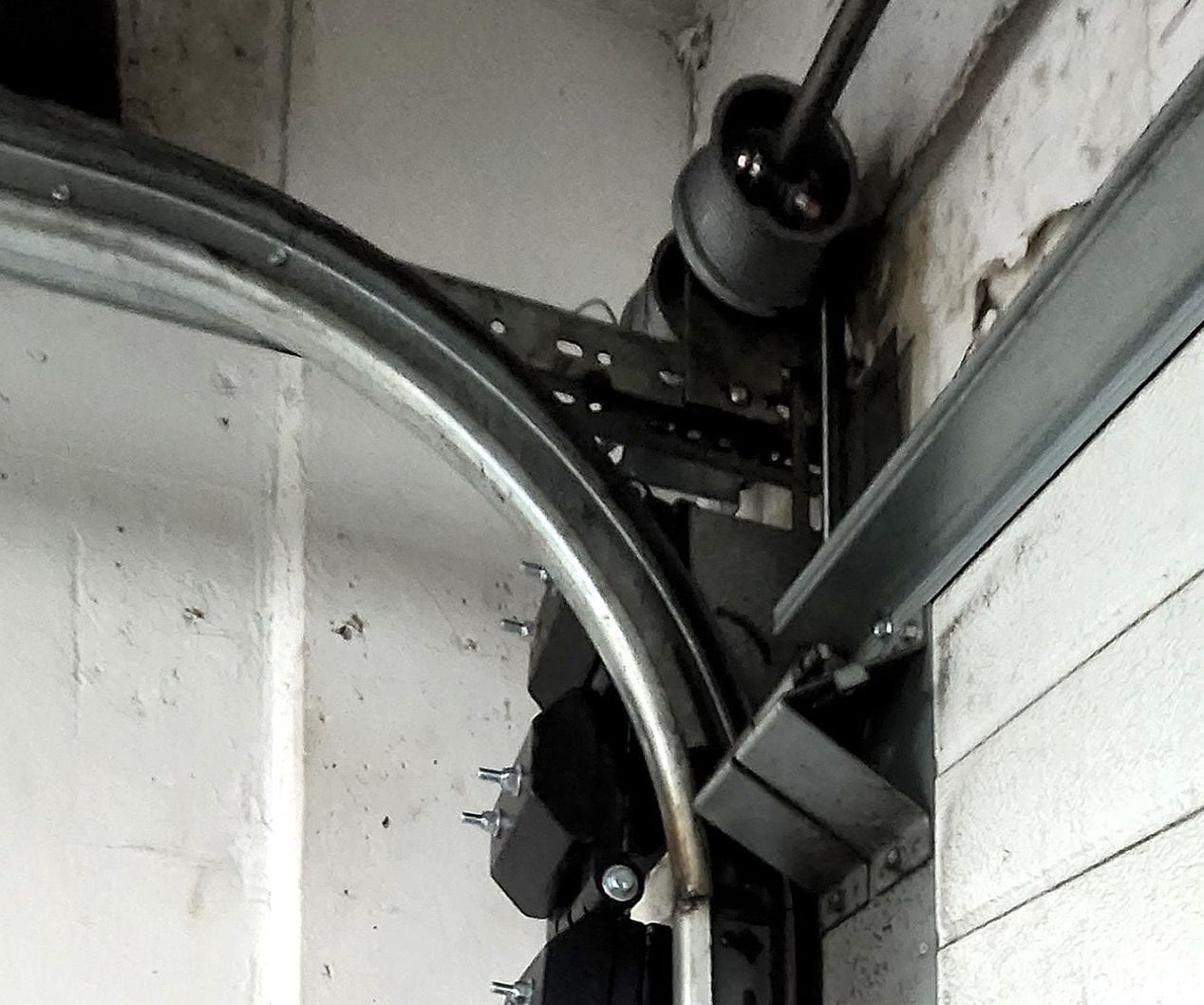
A garage door is a heavy panel held up by springs and cables and guided by rollers in a track. When one of those parts wears out, the door tells you: a bang, a grind, a lean, a door that will not budge.
Signs You Need This
- The door will not open, or opens a foot and stops.
- It will not close all the way, or closes and comes back up.
- Loud grinding, scraping or popping as it moves.
- A roller has come out of the track, or the door hangs off it at one corner.
- The door sits crooked or sags in the middle.
- A loud bang from the garage, then a door that feels very heavy: usually a broken spring.
- A lift cable that is frayed, loose or wrapped wrong on its drum.
The Parts That Wear Out
Most repairs come down to a handful of parts. Springs and cables wear by the number of cycles; rollers and hinges wear faster where salt air reaches them, which near the canals is most of the city. The table shows what each failure looks like from inside the garage.
More columns to the right: swipe.
| Part that fails | What you notice | Repair or replace |
|---|---|---|
| Torsion spring | A bang, a gap in the coil above the door, a door too heavy to lift | Replace, usually both springs as a pair |
| Extension spring | A stretched or snapped spring along the side track | Replace, with its safety cable |
| Lift cable | Frayed strands, slack on one side, a door that lifts crooked | Replace both cables |
| Rollers | Grinding, rumbling, a door that jerks on its way up | Replace the worn set |
| Hinges and brackets | Cracked hinges, rust at the bottom brackets, a panel out of line | Replace the part |
| Track | A dent or bend where a roller catches | Straighten if minor, otherwise replace |
| Panel | A dent, a crack, a section bowed in | Replace the section if still made, or the door |
Why Springs and Cables Stay With the Technician
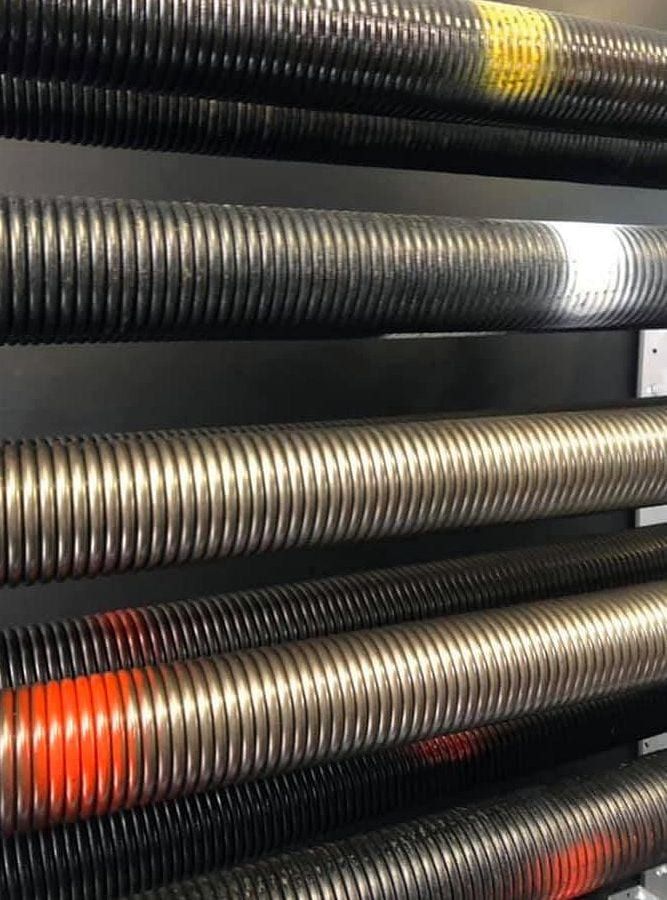
A torsion spring is wound tight enough to lift a door of a few hundred pounds. Unwinding or winding it takes winding bars made for the job and a set order of steps; a slipped screwdriver or the wrong bar can spin out of a hand with real force. Cables are attached to the bottom brackets under that same tension. That is why a broken spring or a loose cable is a call to make, not a weekend project, and why the replacement springs are matched to the weight of the door.
What you can do safely: keep people and cars clear of a door that is stuck partway, leave the opener off, and note what you heard and when it started.
Cables, Rollers and Brackets
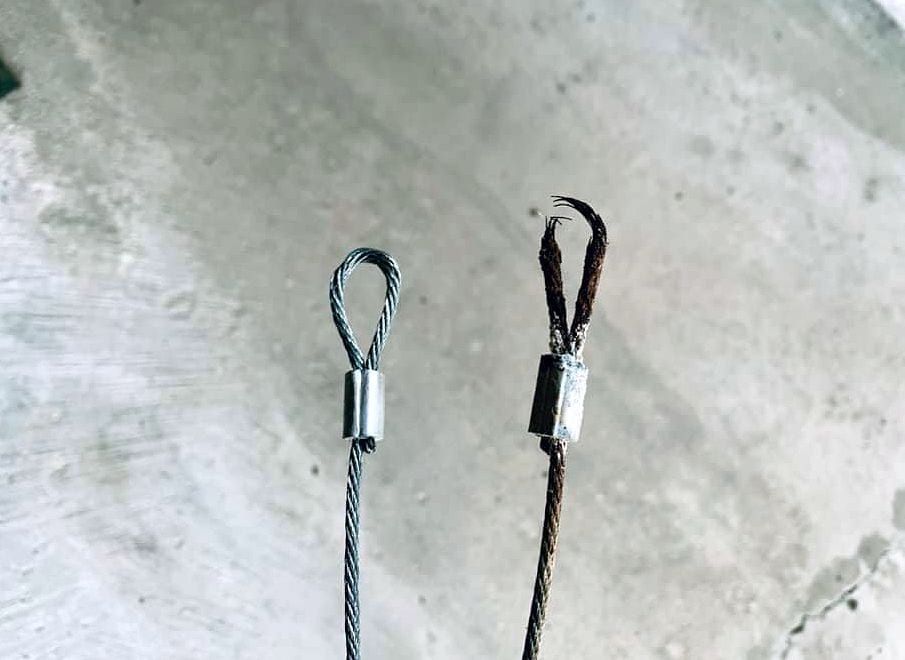
A lift cable rarely snaps without warning. Strands break one at a time near the bottom bracket, where water sits and rust starts, and the door begins to lift unevenly. Replacing both cables at once keeps the door level, since the second one has seen the same wear.
Rollers and the bottom brackets that hold them take the brunt of salt and moisture. A rusted bracket can let go under load, so it is worth a look whenever a door starts to grind.
Same-day emergency repairs cover the urgent cases: a door stuck open overnight, a car trapped inside, a spring that broke before work.
Dented and Patched Panels
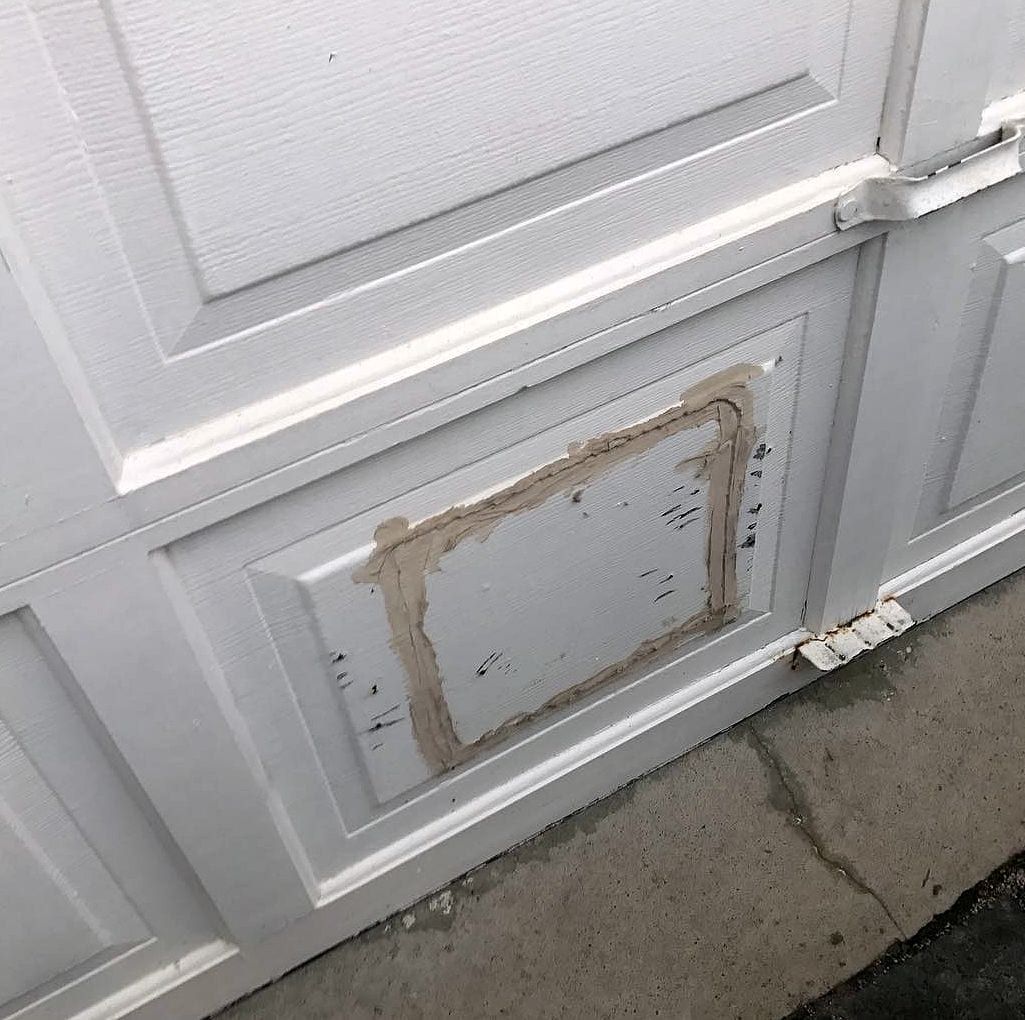
A panel that took a hit from a bumper may still run fine. Once it bows in, though, the rollers on that section ride out of line and the door starts to bind. Filling and patching hides a dent for a while; replacing the section, where the maker still makes it, is the lasting fix. If the door is old enough that sections are no longer made, the new door page covers the next step.
A Stuck or Noisy Door
My door is stuck halfway. Is it safe to force it or leave it?
Leave it, and do not pull it down by hand or keep pressing the wall button. A door stuck partway often has a broken spring or a cable off its drum, and forcing it can drop it. Keep cars and people clear, unplug the opener, and call.
Can I close a door with a broken spring using the opener?
It is best not to. The opener is built to guide a balanced door, not to lift its whole weight, and running it against a broken spring strains the motor and the arm.
Why replace both springs when only one broke?
They went in together and have done the same number of cycles. The second one is usually close behind, and a matched pair keeps the door balanced.
The door is noisy but works. Is that a repair?
Noise is often the first sign of worn rollers, dry hinges or a bracket working loose. Regular maintenance catches those before they turn into a stuck door.